

Post-Surgical Care at Home: Complete Checklist for Fast Recovery
Post-Surgical Care at Home is now available . Recovering from surgery can feel overwhelming, especially when you’re back home and managing everything on your own. You want to heal quickly and avoid any complications, but where do you start?
This complete checklist will guide you step-by-step through the most important things you need to do for your post-surgical care at home. By following these simple, clear tips, you’ll feel more confident and in control of your recovery. Keep reading to discover how to make your healing process smoother and safer—because your health deserves the best care.
Preparing Your Home
Preparing your home after surgery helps speed up healing and keeps you safe. A well-arranged space reduces stress and avoids accidents. Small changes make a big difference in your recovery process.
Focus on what you need close by. Think about safety and comfort. This checklist helps you get ready for post-surgical care at home.
Essential Supplies
Gather all medical supplies before surgery day. Stock up on bandages, antiseptics, and pain relievers. Have extra gloves and gauze for wound care. Keep easy-to-use tools nearby for dressing changes. Prepare cold packs to reduce swelling and heat pads for pain relief. Don’t forget items like a thermometer and a pill organizer.
Safe Environment Setup
Clear walkways to prevent trips and falls. Remove loose rugs and cords from floors. Add night lights in hallways and bathrooms. Use non-slip mats in shower areas. Arrange furniture for easy movement, especially if using crutches or a walker. Keep emergency contacts and phone within reach at all times.
Comfortable Rest Area
Create a cozy spot for rest and recovery. Use pillows to support your body and reduce pressure. Choose soft blankets and breathable sheets. Place a small table nearby for water, medicines, and snacks. Ensure the area has good lighting but can be dimmed for naps. Keep entertainment like books or a tablet within easy reach.
Managing Pain And Medication
Managing pain and medication after surgery is key for a smooth recovery. Proper care helps reduce discomfort and speeds healing. Knowing how to control pain safely supports your body’s repair process.
Taking the right medicines at the right time prevents pain from getting worse. Being aware of side effects keeps you safe and comfortable. Follow instructions closely to avoid problems and feel better faster.
Pain Relief Options
There are many ways to ease pain after surgery. Over-the-counter painkillers like acetaminophen or ibuprofen work well for mild pain. Stronger medications may be prescribed for severe pain.
Cold packs reduce swelling and numb the area. Rest and gentle movement also help manage pain. Avoid pushing your body too hard during recovery.
Medication Schedule
Take medicine exactly as your doctor directs. Set alarms or use a pill organizer to keep track. Never skip doses, even if you feel better. Consistent timing keeps medicine effective.
Keep a list of all your medicines and doses. Share this list with caregivers or family members. This helps avoid missing or doubling doses.
Handling Side Effects
Medicines can cause side effects like nausea, dizziness, or constipation. Drink plenty of water and eat light meals to ease stomach upset. Rest if you feel dizzy or tired.
Report serious side effects such as rash, swelling, or breathing problems to your doctor. Do not stop medications without medical advice. Your doctor can adjust treatment if needed.
Wound Care Tips
Proper wound care is key to healing after surgery. Taking good care of your wound helps avoid problems and speeds up recovery.
Follow simple steps to keep your wound clean and safe. Watch for signs that show your body needs help. Know when to ask a doctor for advice.
Cleaning And Dressing
Wash your hands before touching the wound. Gently clean the wound with mild soap and water. Avoid scrubbing. Pat dry with a clean towel.
Change the dressing as your doctor says. Use sterile materials each time. Keep the wound covered to stop dirt and germs.
Signs Of Infection
Look for redness around the wound. Swelling or warmth can mean infection. Notice if the wound has pus or bad smell.
Feeling more pain than before is a warning. Fever or chills could also show infection. Check your wound every day to catch problems early.
When To Contact A Doctor
Call your doctor if the wound bleeds a lot or does not heal. Contact them if you see spreading redness or swelling. Tell the doctor about fever or strong pain.
Do not wait if you feel something is wrong. Quick help can prevent serious issues. Keep important phone numbers nearby for easy access.

Credit: phenixcare.com
Nutrition And Hydration
Proper nutrition and hydration play a key role in healing after surgery. Good food and enough fluids help the body repair faster. They support the immune system and reduce the risk of complications. Paying attention to what you eat and drink can make a big difference in recovery.
Foods For Healing
Choose foods rich in protein, vitamins, and minerals. Protein helps rebuild tissues and muscles. Eggs, chicken, fish, and beans are excellent sources. Include fruits and vegetables for vitamins A and C. These vitamins boost the immune system and help wounds heal. Whole grains provide energy for the body to recover. Avoid fried and processed foods as they slow healing.
Hydration Importance
Drink plenty of water every day. Water flushes out toxins and keeps the body working well. Staying hydrated prevents constipation, a common post-surgery problem. Aim for at least 8 glasses of water daily. Limit sugary drinks and caffeine, as they can dehydrate. Herbal teas and clear broths also help maintain fluid balance.
Supplements To Consider
Some supplements support healing but talk to a doctor first. Vitamin C and zinc are popular choices for wound repair. Omega-3 fatty acids may reduce inflammation. Probiotics help maintain gut health during antibiotic use. Avoid high doses without medical advice to prevent side effects. Supplements work best alongside a balanced diet.
Physical Activity Guidelines
Physical activity after surgery plays a key role in healing. It helps reduce pain, prevents complications, and boosts energy. Following clear guidelines keeps you safe and speeds recovery. Always listen to your body and stop if you feel pain or dizziness.
Safe Movements
Move gently and avoid sudden motions. Use slow, controlled actions to protect surgical sites. Keep good posture to prevent strain. Ask for help lifting or moving heavy items. Avoid twisting or bending deeply during early recovery.
Exercise Restrictions
Avoid high-impact activities like running or jumping. Do not lift heavy weights until cleared by your doctor. Skip stretching or exercises that stress the surgery area. Rest is important to allow tissues to heal properly. Follow specific limits your healthcare team gives you.
Gradual Mobility Increase
Start with simple movements like sitting and standing. Take short walks inside your home first. Increase activity time and distance step by step. Use breaks to rest and prevent fatigue. Gradual progress helps build strength without injury.

Credit: assistedcares.com
Monitoring Recovery Progress
Monitoring recovery progress after surgery is crucial for a safe and smooth healing process. It helps you notice changes and catch problems early. Careful observation supports faster healing and fewer complications.
This section guides you on how to track symptoms, keep follow-up appointments, and use recovery apps effectively.
Tracking Symptoms
Write down any new or unusual symptoms daily. Check for pain, swelling, redness, or fever. Note changes in appetite, energy, or mood. Early detection of issues can prevent serious problems. Share this information with your healthcare provider.
Follow-up Appointments
Attend all scheduled follow-up visits. These appointments let doctors check your healing progress. They adjust treatment if needed and answer your questions. Missing them may delay recovery or hide complications. Keep a calendar to avoid forgetting dates.
Using Recovery Apps
Recovery apps help track symptoms and medication times. They send reminders for exercises and appointments. Some apps let you log daily feelings and pain levels. This data helps doctors understand your recovery better. Choose apps that are simple and reliable.
Emotional Well-being
Emotional well-being is a key part of healing after surgery. Feelings of anxiety, sadness, or frustration can appear. These emotions can affect recovery speed and comfort. Taking care of your mental state helps you heal better. It also makes the recovery process less stressful.
Managing Stress
Stress can slow down healing. It raises blood pressure and affects sleep. Try to keep daily routines simple and calm. Avoid too much noise or busy places. Break tasks into small steps to feel less overwhelmed. Take short breaks to breathe deeply and relax.
Seeking Support
Talking to friends or family helps lighten emotional burdens. Share your feelings and concerns openly. Join a support group if possible. Knowing others have similar experiences can comfort you. Professional help, like counseling, is useful for tough times. Never hesitate to ask for help when needed.
Relaxation Techniques
Relaxation helps reduce tension and improves mood. Practice deep breathing exercises several times a day. Try gentle meditation or guided imagery to calm your mind. Listening to soft music or nature sounds can soothe anxiety. Even a short walk outside, if allowed, refreshes your spirit.
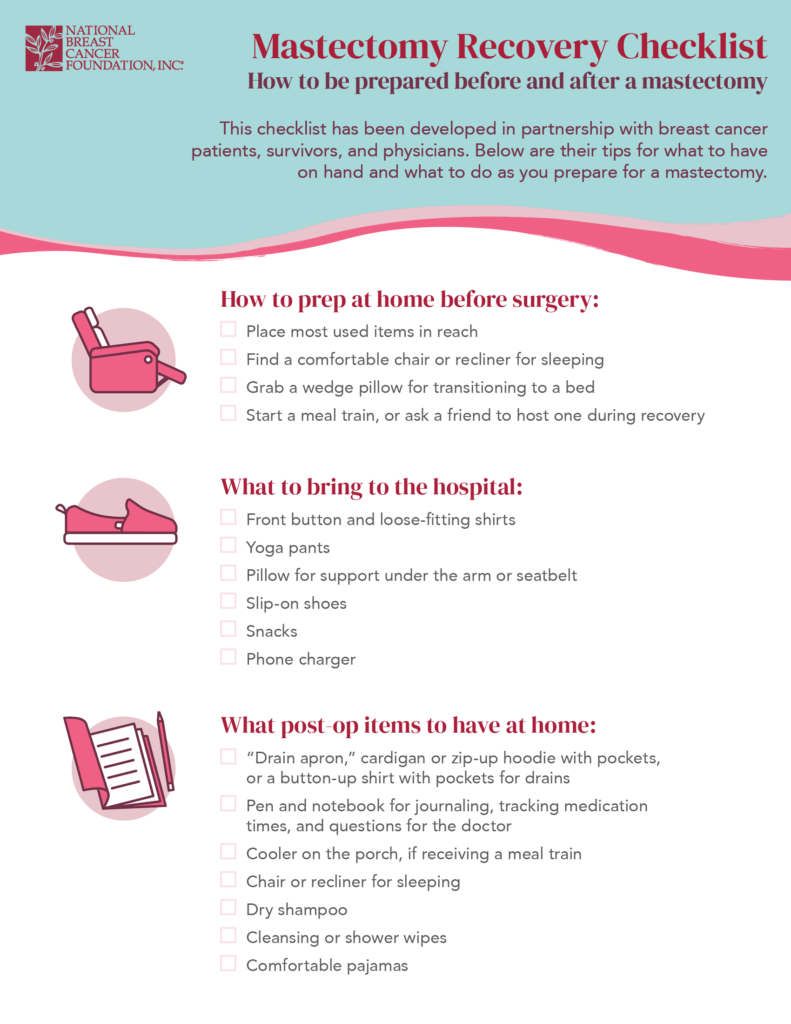
Credit: www.nationalbreastcancer.org
Emergency Signs To Watch
After surgery, some signs need quick attention. Recognizing these signs can prevent serious problems. Knowing what to watch helps keep recovery safe and smooth.
Severe Pain Or Swelling
Some pain is normal after surgery. But sharp or growing pain is a warning. Swelling that gets worse or spreads may mean infection or bleeding. Call your doctor if pain or swelling grows fast.
Unusual Discharge
Normal wounds may have a little clear or light fluid. Thick, yellow, green, or foul-smelling discharge signals infection. Red streaks near the wound also need medical help. Keep the area clean and report any unusual discharge quickly.
Fever And Chills
A mild fever may happen after surgery. High fever over 101°F or chills can mean infection. Watch for sweating, shivering, or feeling very weak. Contact your healthcare provider if fever or chills appear.
How The Best Home Care Service Can Help You with Post-Surgical Care at Home: Complete Checklist
Enhancing Recovery Through Practical Learning at Home
Understanding the essentials of post-surgical care at home goes beyond just following a checklist—it offers valuable opportunities for practical learning that support a smoother recovery. For instance, managing pain and medication effectively requires attentiveness and clear communication, skills that can be honed as you monitor dosage schedules and observe how the body responds. Similarly, wound care tips invite hands-on practice, teaching you to recognize signs of healing or potential infection, which is crucial for timely interventions.
Moreover, paying close attention to nutrition and hydration provides insight into how diet directly impacts healing, encouraging mindful meal preparation and fluid intake. Families in Dhaka can benefit from resources like The Best Home Care Service, which emphasizes compassionate, personalized care and can offer guidance tailored to individual recovery needs. Should questions arise about monitoring recovery progress or emergency signs, having a reliable contact such as support@thebesthomecareservice.com or calling +88017 1417 7837 can provide reassurance and expert advice without overwhelming you.
Frequently Asked Questions
What Are The Essential Items For Post-surgical Care At Home?
Essential items include wound dressings, pain medication, antiseptic solutions, comfortable clothing, and mobility aids. Keeping a thermometer and hydration supplies is also important for monitoring recovery and preventing infections.
How To Manage Pain Effectively After Surgery At Home?
Use prescribed painkillers as directed and apply ice packs to reduce swelling. Rest is crucial, and avoid strenuous activities to prevent pain flare-ups and support healing.
When Should I Seek Medical Help During Home Recovery?
Seek help if you notice excessive bleeding, severe pain, fever, or signs of infection like redness and swelling. Persistent nausea or breathing difficulties also require immediate medical attention.
How To Maintain Hygiene For Surgical Wounds At Home?
Wash hands before touching the wound and change dressings daily. Use sterile materials and avoid soaking the wound unless instructed by your doctor to prevent infections.
Conclusion
Caring for yourself after surgery takes focus and patience. Follow the checklist step-by-step to avoid problems. Rest well, eat healthy, and keep your wounds clean. Watch for signs that need medical help. Ask for support when you feel unsure. Small actions make a big difference in healing.
Stay calm and take one day at a time. Your body will thank you as you recover safely at home.